
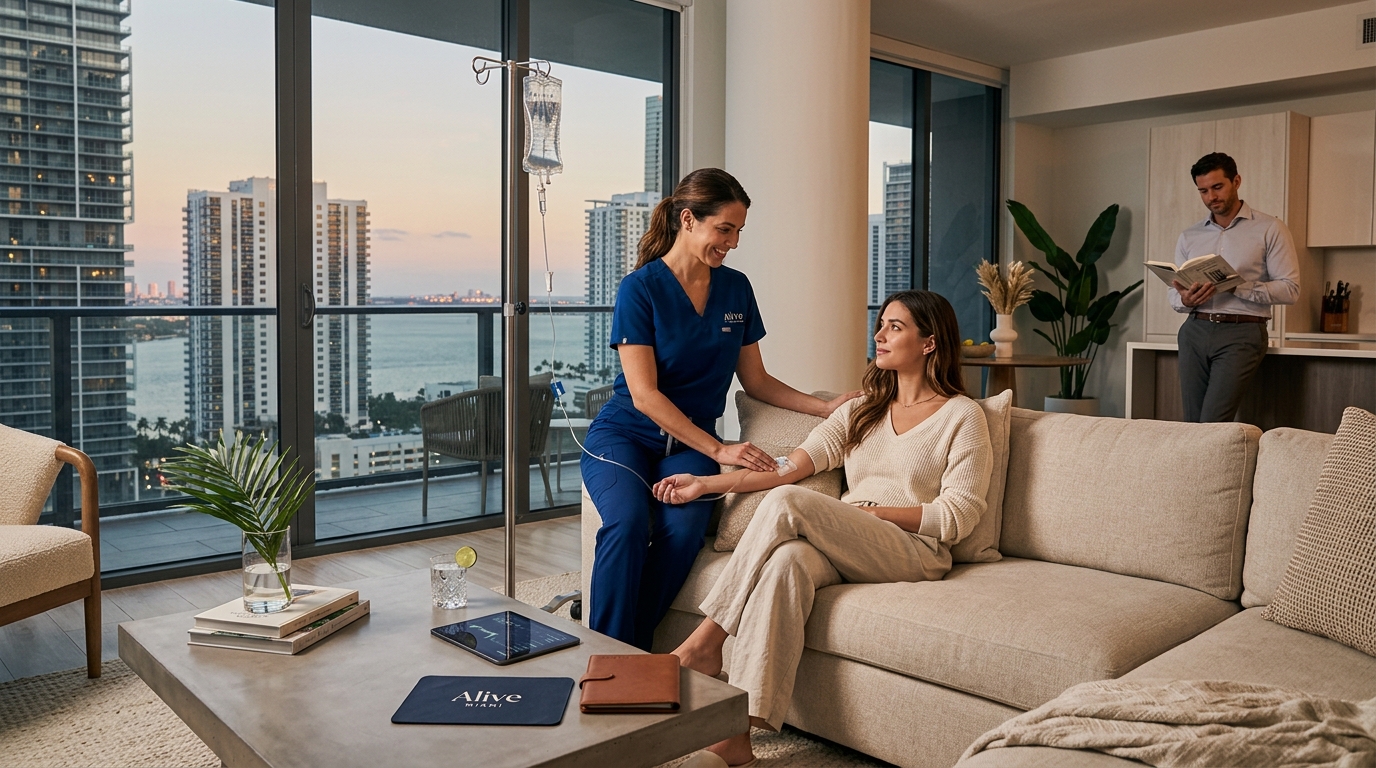
Hydration requirements increase significantly in tropical urban environments. Clinical data shows that over sixty percent of adults experience chronic mild dehydration during peak summer months. This physiological deficit directly impacts cognitive performance and cellular recovery. Residents and visitors in high-density commercial districts frequently seek rapid clinical intervention. Mobile infusion services bridge the gap between clinical efficacy and residential convenience. Providers now dispatch licensed medical teams directly to offices and private residences. This operational model eliminates travel fatigue while delivering precise electrolyte balance. Hydration science confirms that intravenous delivery bypasses gastrointestinal absorption limits. The result is immediate systemic availability for critical micronutrients. (Blog Alive Miami)
The Clinical Demand for On-Demand Hydration
Modern professionals prioritize time efficiency over traditional clinic visits. Mobile infusion teams operate within strict clinical protocols. They utilize FDA-approved catheters and sterile compounding standards. This approach ensures patient safety during home or office administration. Global health guidelines emphasize that rapid fluid replacement prevents acute renal stress. Clinics in dense urban corridors now maintain dedicated dispatch fleets. These fleets operate across downtown commercial zones and residential high-rises. The infrastructure supports same-day scheduling and rapid response times. Patients benefit from reduced exposure to public waiting areas. The operational model aligns with contemporary wellness expectations.
Defining Clinical Mobile Infusion
Clinical mobile infusion is the direct administration of sterile fluids into the venous system by licensed medical personnel at a non-clinical location. This definition distinguishes on-demand services from traditional hospital-based treatments. Providers must maintain cold-chain storage for temperature-sensitive compounds. They also carry emergency response kits and automated vital sign monitors. The regulatory framework requires strict adherence to state nursing boards. Compliance ensures that every dispatch meets established medical standards.
Evaluating Provider Credentials and Safety Standards
Not all wellness centers maintain equivalent clinical oversight. Prospective clients must verify nursing licenses and physician supervision agreements. Reputable operators employ registered nurses or certified nurse practitioners. These professionals possess advanced certification in intravenous administration. They conduct thorough pre-administration assessments to identify contraindications. Medical safety protocols mandate sterile technique and single-use equipment. Clients should request proof of malpractice coverage and infection control audits. Transparent operators publish their clinical governance documents online. This transparency builds trust and reduces administrative friction. Verification remains the most critical step before scheduling a dispatch.
Understanding Regulatory Compliance
Regulatory compliance is the systematic adherence to state and federal healthcare mandates governing intravenous administration outside traditional hospital settings. Operators must maintain active business licenses and clinical partnerships. They also submit to periodic quality assurance reviews. These reviews verify proper waste disposal and equipment sterilization. Clients benefit from knowing that every mobile unit undergoes routine inspection. The verification process protects vulnerable populations from unqualified practitioners.
Core Service Offerings and Clinical Tiers
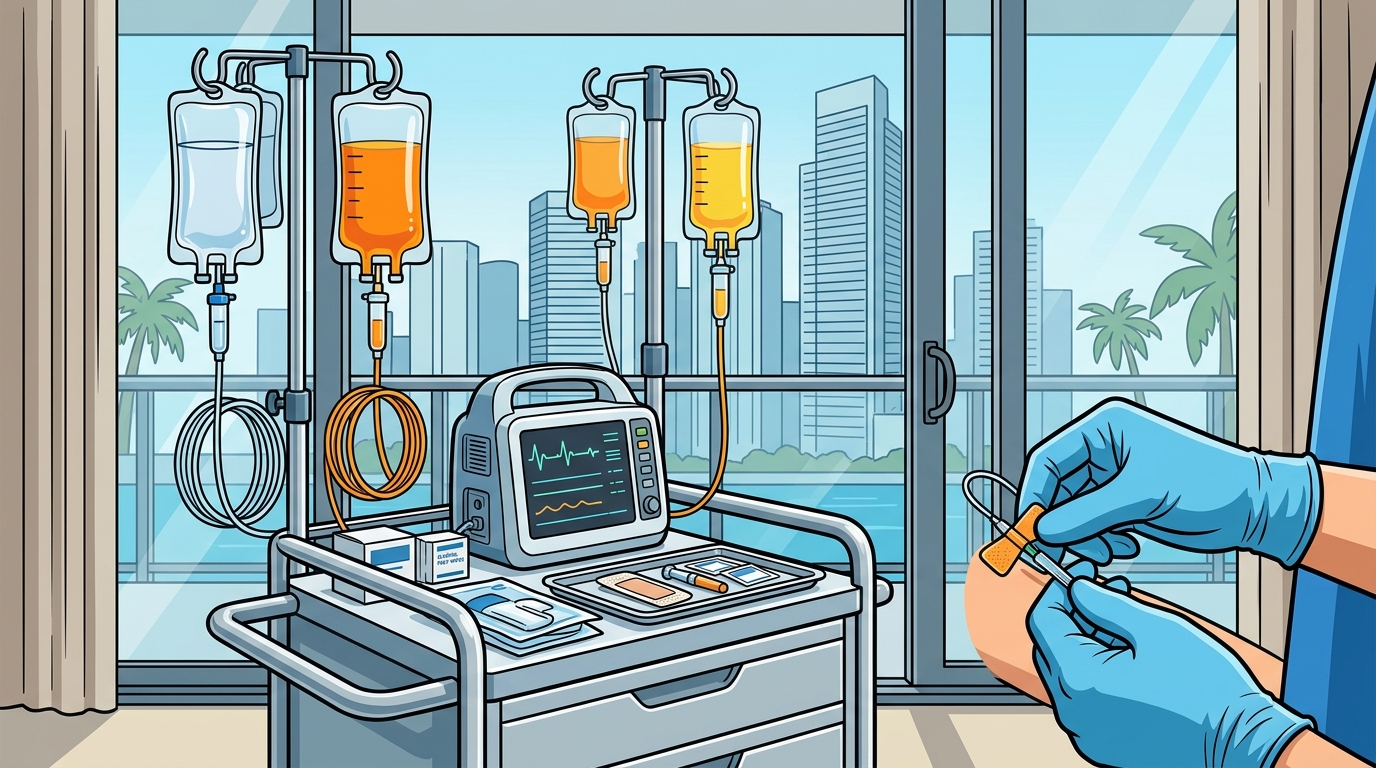
Mobile infusion menus typically categorize treatments by therapeutic intent. Standard hydration drips focus on electrolyte restoration and basic vitamin supplementation. Premium formulations incorporate specialized compounds for cellular regeneration. Premium IV drips often feature glutathione and magnesium complexes. Longevity protocols integrate NAD+ precursors and peptide sequences. Clients can customize their infusion based on specific physiological goals. The clinical team adjusts flow rates to match individual tolerance levels. This customization maximizes therapeutic outcomes while minimizing adverse reactions.
Exploring Advanced Formulations
Advanced formulations are specialized intravenous mixtures designed to target specific metabolic pathways or cellular repair mechanisms. These mixtures often combine antioxidants, amino acids, and trace minerals. Clinicians select compounds based on diagnostic blood work and lifestyle factors. The formulation process requires precise compounding to maintain chemical stability. Patients experience targeted benefits without oral supplementation limitations. The clinical approach supports sustained energy and immune resilience.
Pricing Models and Membership Structures
Cost structures vary significantly across metropolitan service areas. Single-session pricing typically reflects the premium for on-site dispatch. Providers charge additional fees for travel logistics and clinical supplies. Membership programs offer discounted rates for frequent users. These programs often include priority scheduling and complimentary diagnostic consultations. Membership benefits frequently bundle hydration sessions with recovery modalities. Clients who commit to quarterly wellness plans achieve better long-term outcomes. The financial model rewards consistent engagement and preventive care. Transparent pricing eliminates hidden charges and supports budget planning.
Comparing Service Packages
Service packages are structured treatment bundles that combine multiple therapeutic modalities into a single scheduled intervention. These bundles often pair intravenous therapy with compression recovery or red light exposure. The combined approach accelerates cellular repair and reduces systemic inflammation. Clients receive streamlined scheduling and consolidated billing. The operational efficiency reduces administrative overhead while maximizing clinical impact. Strategic bundling supports comprehensive wellness optimization.
Geographic Coverage and Dispatch Logistics
Dispatch radiuses typically span major commercial and residential districts. Providers prioritize high-density zones to optimize fleet utilization. Response times generally range from thirty to sixty minutes during standard business hours. Weekend and holiday requests may require advance scheduling. The logistics network relies on real-time tracking and dedicated driver coordination. Clients receive automated confirmations and direct provider contact details. The operational framework ensures reliable service across downtown corridors and waterfront communities. Geographic expansion continues as demand increases in emerging wellness districts.
Assessing Service Limitations
Service limitations are operational constraints that restrict mobile infusion availability based on distance, regulatory jurisdiction, or clinical complexity. Providers may exclude certain high-risk medications from home administration. They also restrict dispatch to buildings with adequate parking and elevator access. Clients should verify coverage boundaries before finalizing their appointment. Understanding these constraints prevents scheduling conflicts and ensures seamless execution.
Service Comparison Overview
| Service Tier | Primary Clinical Focus | Typical Duration | Best Use Case |
|---|---|---|---|
| Standard Hydration | Electrolyte restoration and basic vitamin replenishment | 45 to 60 minutes | Post-flight recovery and mild fatigue |
| Premium IV Drips | Advanced antioxidant and mineral complexation | 60 to 75 minutes | Immune support and chronic stress management |
| Longevity Protocols | Cellular regeneration and metabolic optimization | 75 to 90 minutes | Anti-aging strategies and performance enhancement |
| Recovery Bundles | Combined infusion and physical therapy modalities | 90 to 120 minutes | Athletic recovery and post-surgical rehabilitation |
Key Takeaways
- Mobile infusion services deliver clinical-grade hydration directly to residential and commercial addresses.
- Providers must maintain active nursing licenses and physician oversight to operate legally.
- Premium formulations incorporate specialized compounds for cellular regeneration and metabolic support.
- Membership programs offer discounted rates and priority scheduling for consistent users.
- Dispatch logistics typically cover high-density urban corridors within a sixty-minute window.
- Transparent pricing structures eliminate hidden charges and support long-term wellness planning.
- Regulatory compliance ensures sterile technique and proper waste disposal during every administration.
Frequently Asked Questions
Is mobile IV therapy safe for first-time patients?
Yes, mobile administration follows strict clinical safety protocols. Licensed nurses conduct comprehensive pre-administration assessments. They verify medical history and current medication lists. The sterile environment and single-use equipment minimize infection risks. First-time patients typically experience minimal discomfort during catheter insertion.
How long does a typical mobile infusion session last?
Standard hydration sessions require approximately forty-five to sixty minutes. Premium formulations and longevity protocols extend to seventy-five or ninety minutes. The clinical team adjusts flow rates based on individual tolerance levels. Patients can work, read, or rest during the administration process.
What qualifications do mobile infusion nurses possess?
Mobile nurses hold active state licenses and advanced IV certification. They undergo rigorous training in emergency response and complication management. Each provider maintains current CPR and ACLS credentials. The clinical team also completes annual infection control audits.
Can I combine mobile IV therapy with other wellness services?
Absolutely. Many providers offer bundled packages that integrate recovery modalities. Clients can pair hydration sessions with compression therapy or red light exposure. The combined approach accelerates cellular repair and reduces systemic inflammation. Strategic scheduling maximizes therapeutic outcomes while minimizing time commitments.
How do I schedule a mobile infusion in downtown areas?
Scheduling typically occurs through online booking platforms or direct phone consultation. Clients provide their exact address and preferred time window. The dispatch team confirms availability and assigns a dedicated clinical unit. Automated confirmations include provider contact details and preparation instructions.
Are there any restrictions on medications administered via mobile infusion?
Certain high-risk compounds require traditional clinic administration. Providers restrict home delivery for medications requiring continuous cardiac monitoring. They also exclude controlled substances and complex chemotherapy agents. Standard hydration and vitamin formulations remain fully available for mobile dispatch.
What happens if I experience an adverse reaction during administration?
Mobile units carry comprehensive emergency response kits and automated vital sign monitors. Nurses are trained to recognize and manage infusion-related complications immediately. The clinical protocol includes immediate cessation and targeted intervention. Patients receive follow-up care and documentation for their primary physician.
Book Your Mobile Session
Secure your preferred time slot through our centralized scheduling platform. Our clinical team verifies your coverage area and confirms dispatch availability. You will receive a detailed preparation guide and direct provider contact information. Visit https://alivemiami.com/ to complete your registration. We prioritize clinical excellence and operational reliability for every administration.